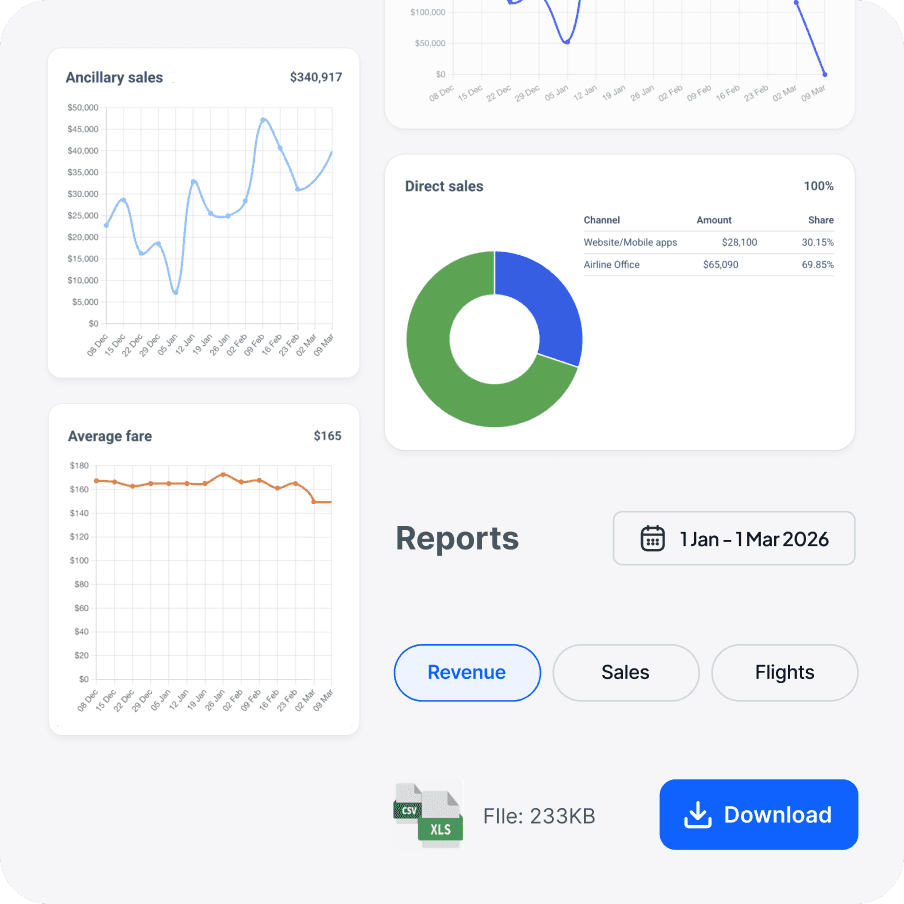
Airline inventory built for real operations
Why inventory problems show up everywhere else
Channel conflicts
OTAs, agencies, and direct channels show different availability because updates propagate slowly.
Ghost inventory
Seats stay blocked or unavailable because systems sync in batches, not in real time.
Manual flight management
Routes, schedules, and aircraft configs require jumping between disconnected tools.
Operational mismatch
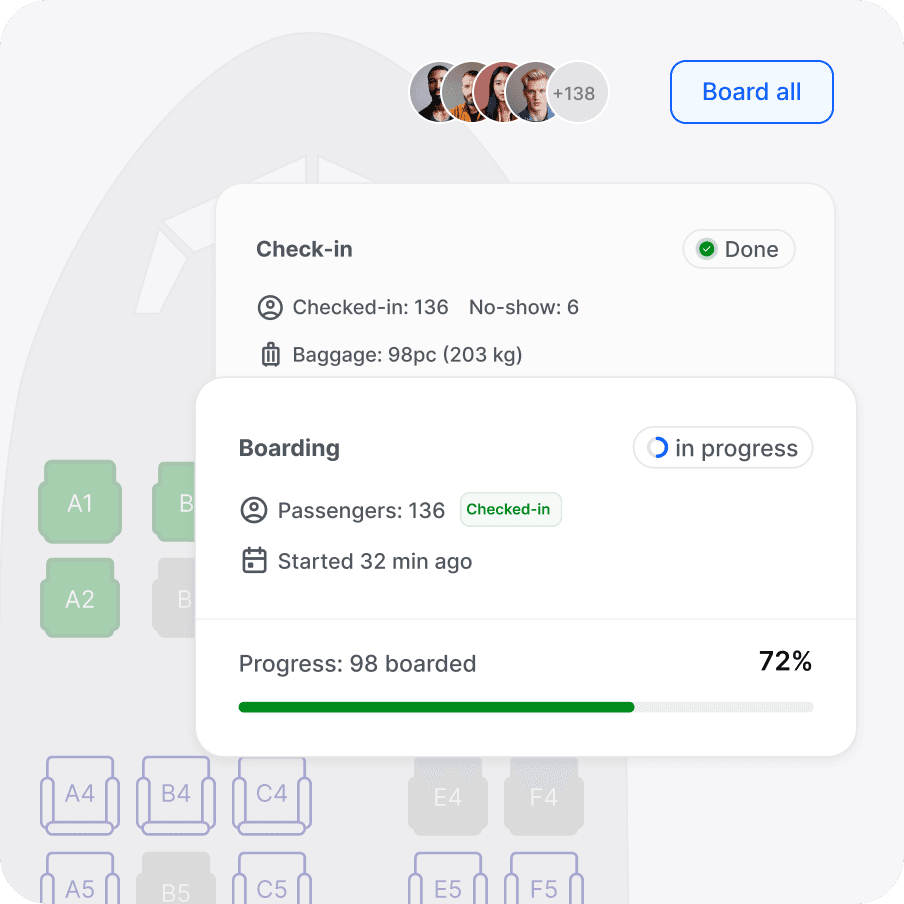
Inventory changes don't reach airport systems, causing boarding and reporting inconsistencies.
Every lever that controls what you sell
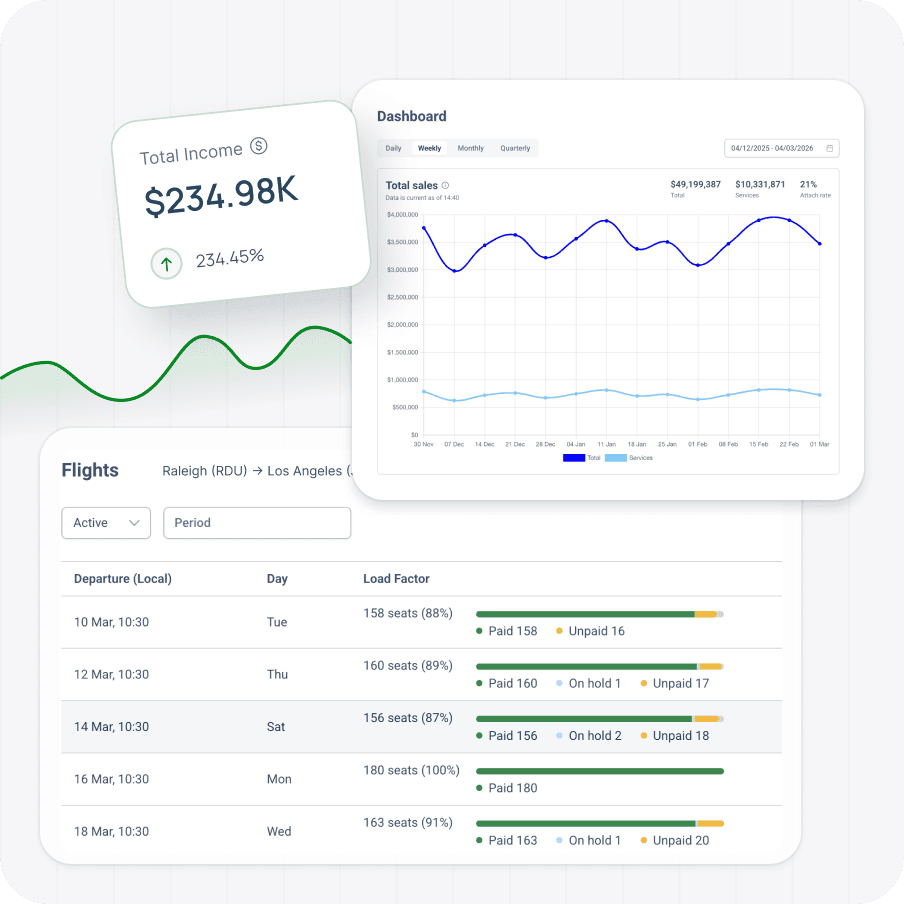
Flight & schedule management
Create flights, configure aircraft layouts, and manage routes from one interface.
Seat availability control
Set availability by channel, fare class, and booking window - updates propagate instantly.
Fare classes & pricing rules
Define fare classes and pricing rules per route and channel, without redeploying.
Ancillary inventory
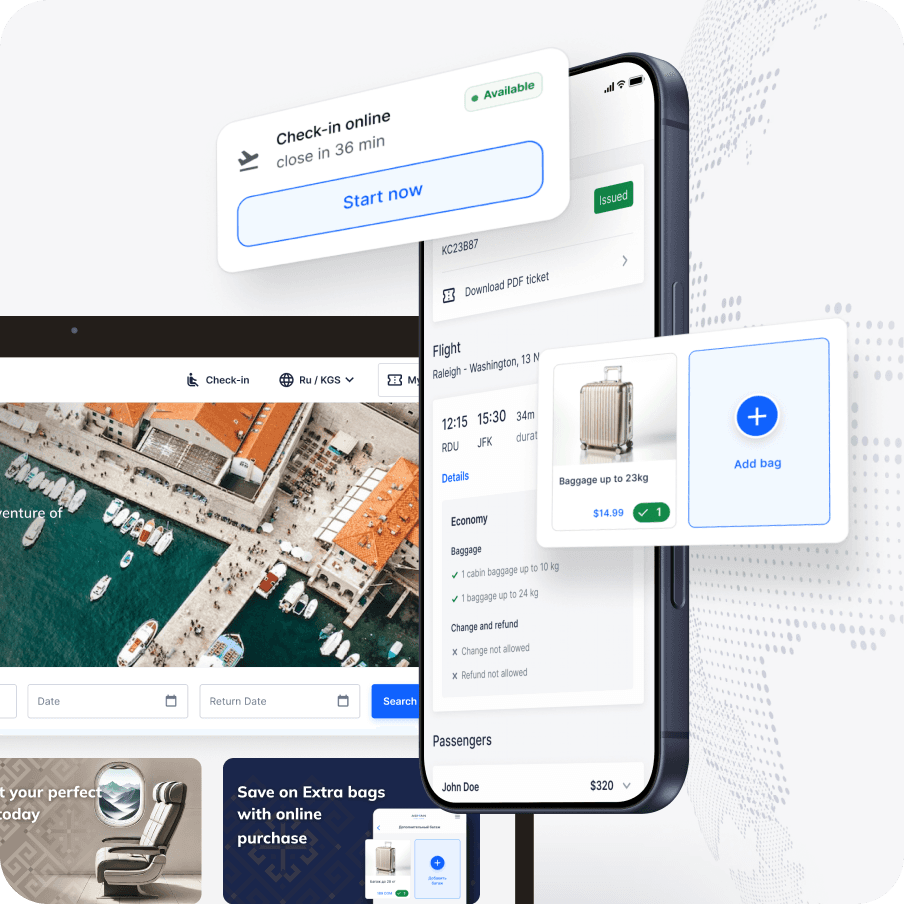
Bags, meals, seats, and bundles managed in the same inventory as flights.
When inventory changes, everything downstream knows
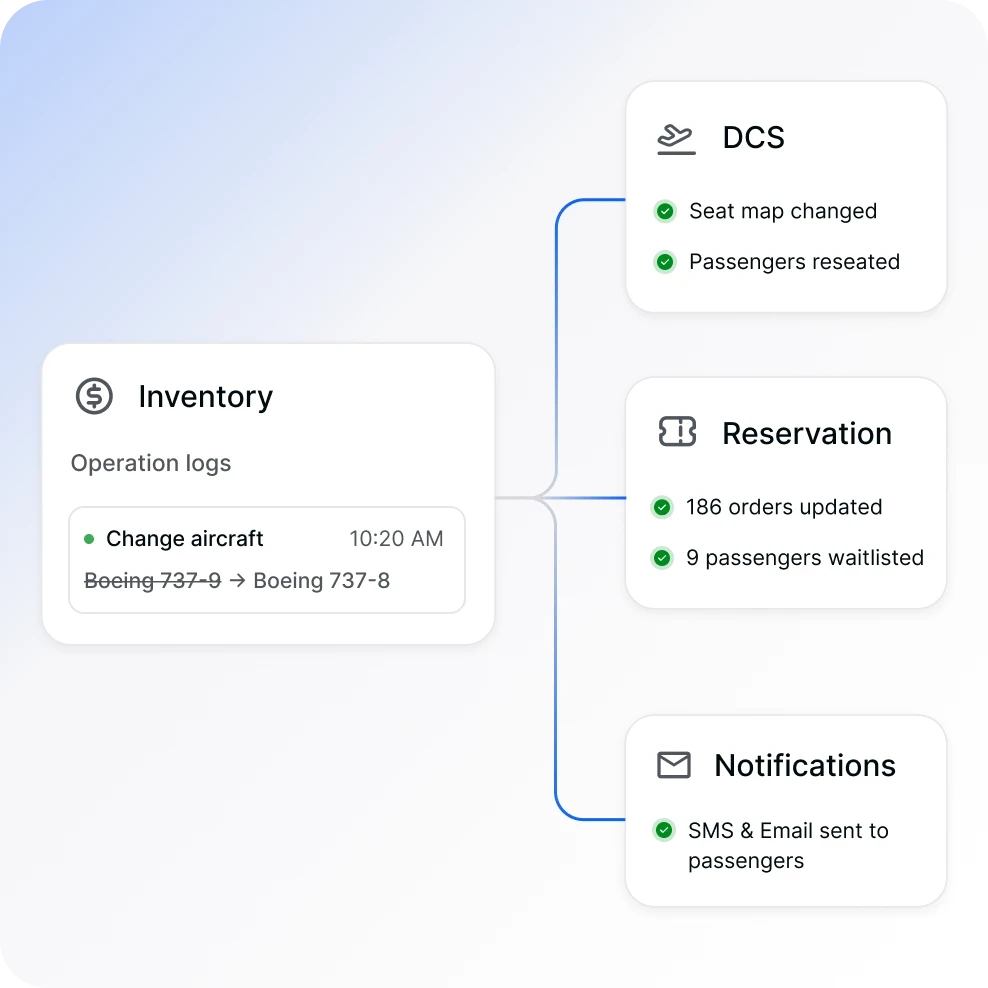
Inventory updates automatically propagate to reservations, DCS, and passenger communications - seat sales, flight changes, and cancellations stay synchronized across commercial and operational systems.
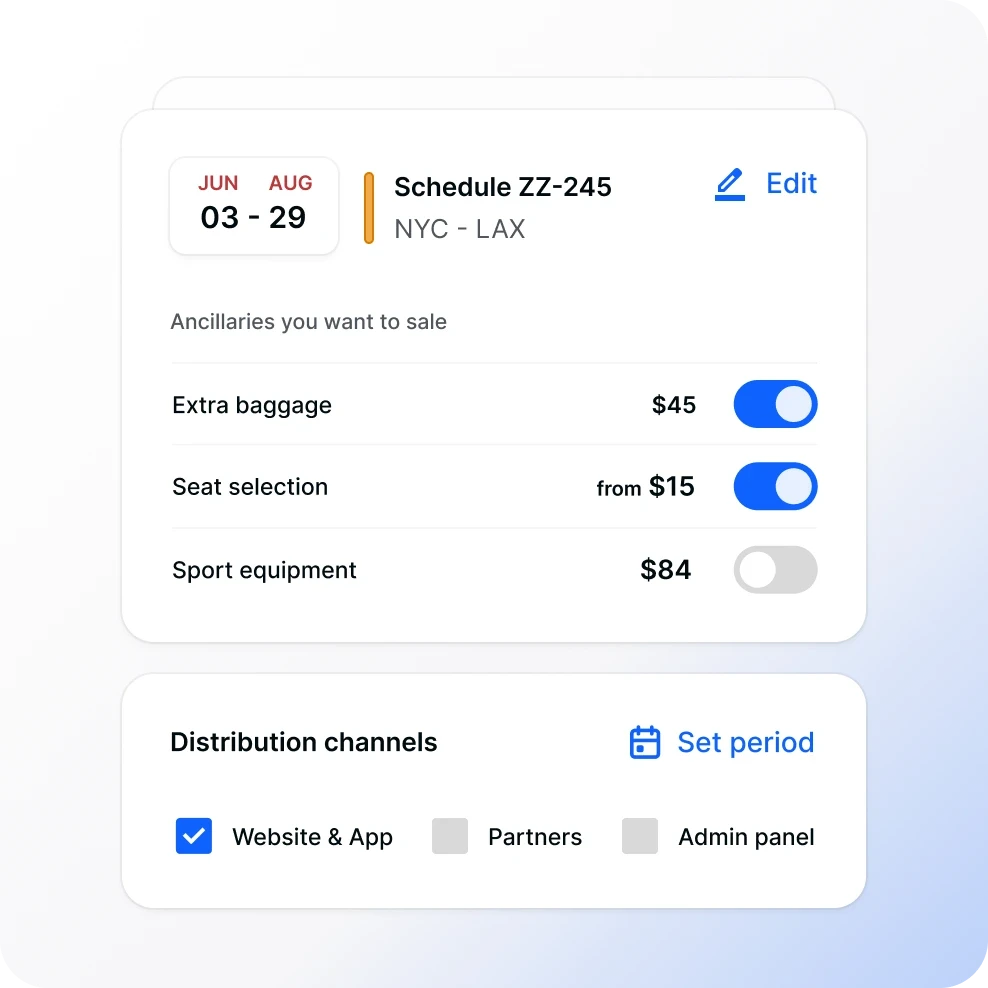
Set the rules for who sells what, and at what price
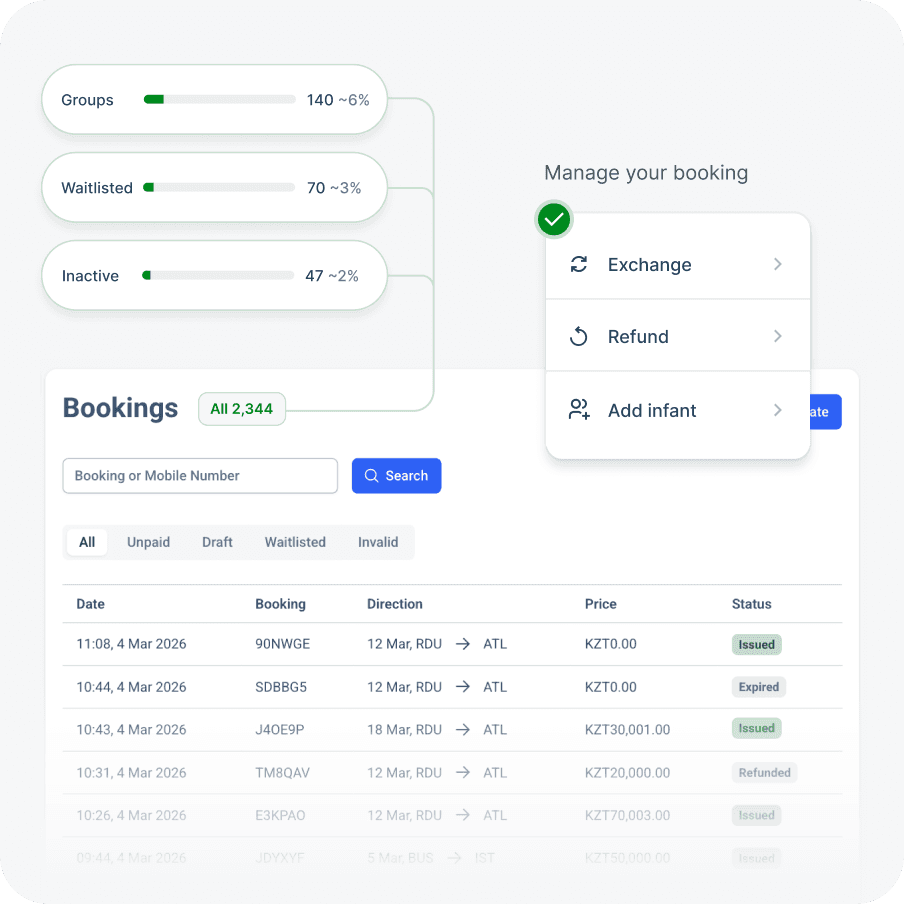
Prioritize high-value channels, manage fare availability by class and booking window, and attach ancillaries like seats, bags, and priority boarding - all controlled from inventory.
Before you decide
How does Farel's inventory system differ from a traditional AIS?
How does inventory prevent overbooking and ghost seats?
Can we control which channels see which fares and availability?
How are schedule changes handled across the system?
Does the inventory system support charter and ad-hoc flights?
How long does it take to set up and go live?