
A working RMS, included
Rule-based fare-class optimization on live booking data, same platform as reservations and inventory, with analyst override authority on every decision.
- Rule-based class management
- Real-time inventory sync
- Analyst dashboard and overrides
- Included in the per-passenger fee
Revenue management doesn't belong in Excel
Spreadsheet workflows lag the booking curve, can't be audited, and don't scale past a handful of routes.
Exports lag the booking curve
Analysts work from yesterday's CSV. By the time the surge shows up in the spreadsheet, the seats are gone.
Class moves get re-keyed by hand
Decision made in Excel, re-entered into the PSS. Two systems, two records, two chances to get it wrong.
No rules, every flight is manual
Every class open, every bucket close, every fare deck change is a human action. The team caps at the number of routes one analyst can hold in their head.
No audit trail
Who closed class Y on ZZ-204 last Tuesday? No one knows. Spreadsheets don't log overrides.
What the RMS actually does
Built into the platform, not bolted onto it.
Fare classes and buckets
Define them per route, flight, and season; the system applies them automatically.
Rule-based class movements
Open and close classes by booking window, load factor, or custom rule. Auto or analyst-reviewed.
Real-time booking pace
Live load factor, velocity, and bucket fill from the same database as reservations. No batch import.
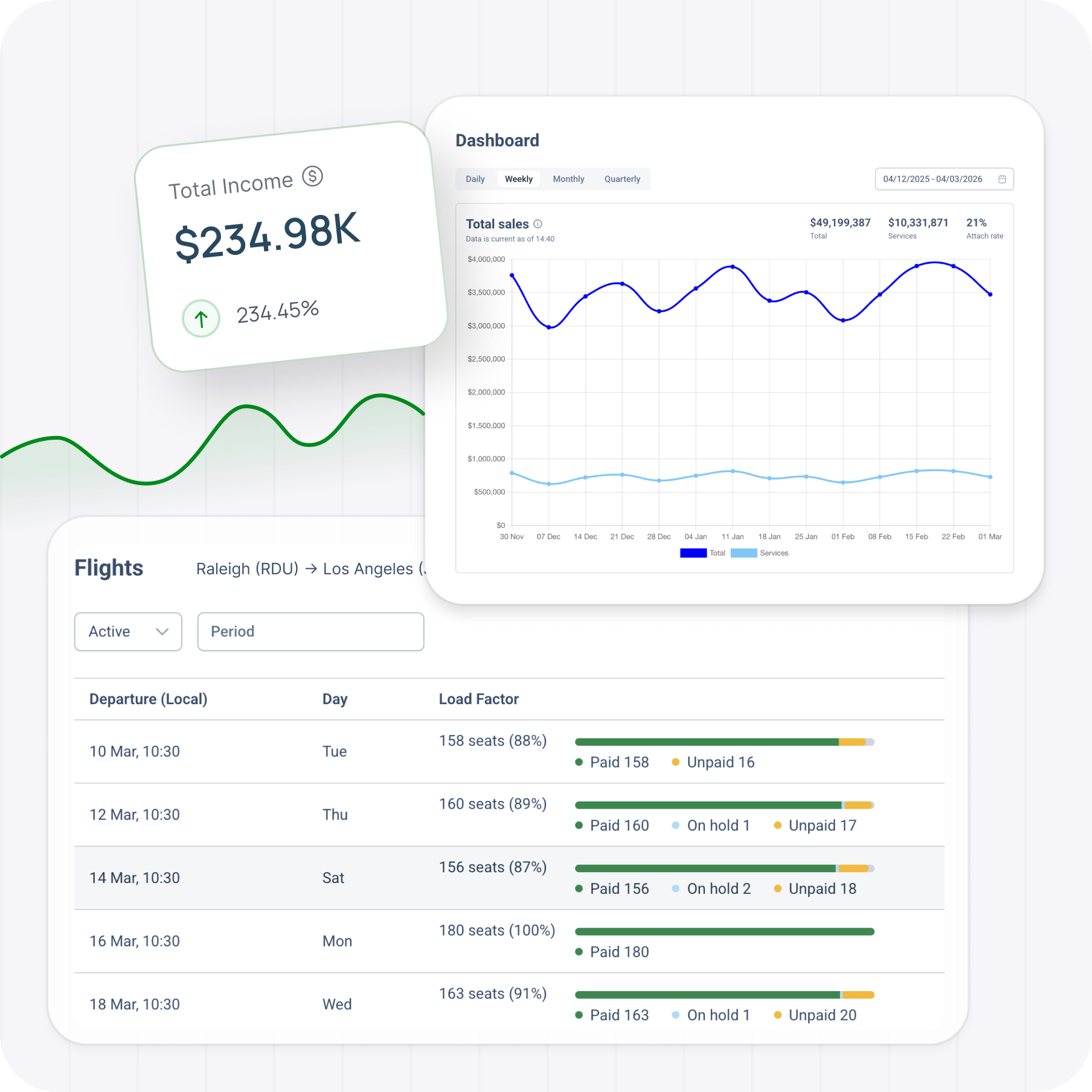
Analyst dashboard and overrides
Override at the flight, route, or class level. Nothing is locked.
Channel-aware pricing
Different fares per route, channel, agency, and season. Edit and publish without redeploying.
Live data, rule engine, analyst control
Farel RMS runs on the same database as inventory and reservations. The pace it sees is the pace right now - and every class move it makes lands in inventory the instant it's made.
The RMS reads from your live database
Standalone RMS systems import PSS data in batches - hourly, every six hours, sometimes once a day. By the time the system sees the surge, the seats are sold. Farel RMS doesn't import anything. It reads from the same records as reservations and inventory, so booking pace, load factor, and bucket fill are accurate to the second.
Define a rule once, run it on every flight
Open class Y at 45 days out. Close class M above 75% load factor. Move a bucket down a class when the next one sells out. Rules are defined in plain logic per route, season, or fleet. The system applies them automatically; analysts handle exceptions.
Overrides land in inventory instantly
A class move in the analyst dashboard writes directly to the inventory record. No re-keying, no batch sync, no PSS round-trip. Channels - direct, agency, OTA, API - see the new availability the moment the analyst confirms.
FAQ
Before you decide
Answers to the questions we hear most from airline teams.
Everything your airline needs, in one place
From inventory to check-in, see how each module works on the same record.
Inventory & Pricing
Optimize every seat, maximize every flight
Manage seat availability, fare structures, and revenue logic across all distribution channels.


Ready to price on live booking data?
See fare classes reoptimize on your own routes - with an analyst's override at every step.