
56 years of paper, replaced in one go-live
How Ireland's Aran Islands carrier moved from a single paper booking book to online sales, live availability at every station, and electronic manifests, cutting inbound phone calls 30–40% in the first month.

Getting onto the Farel platform has been transformational. The volume of phone calls has reduced by 30–40%, better than expected, and it eliminated the frantic activity in the Ops office.
The bus to the mainland, flown
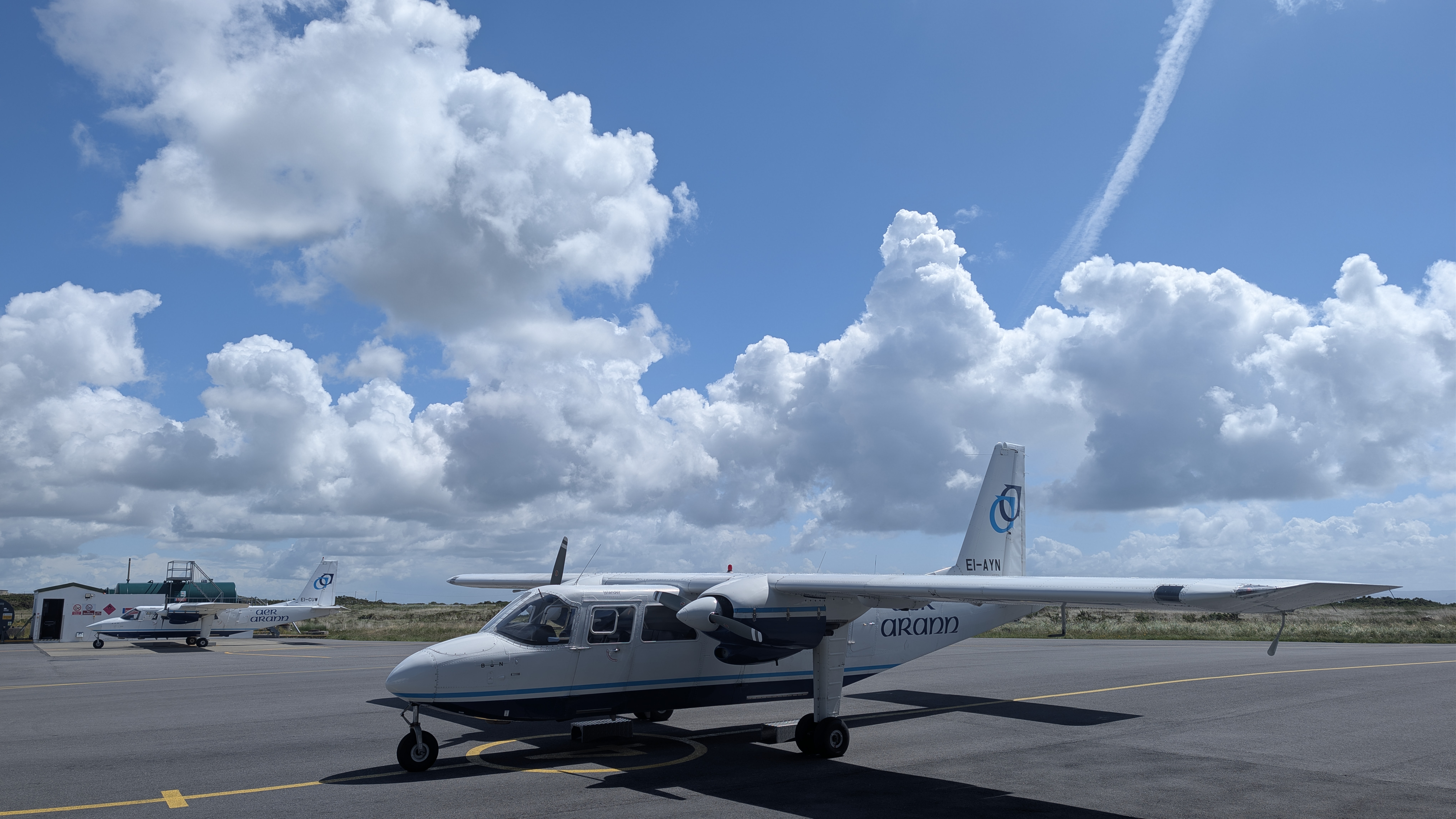
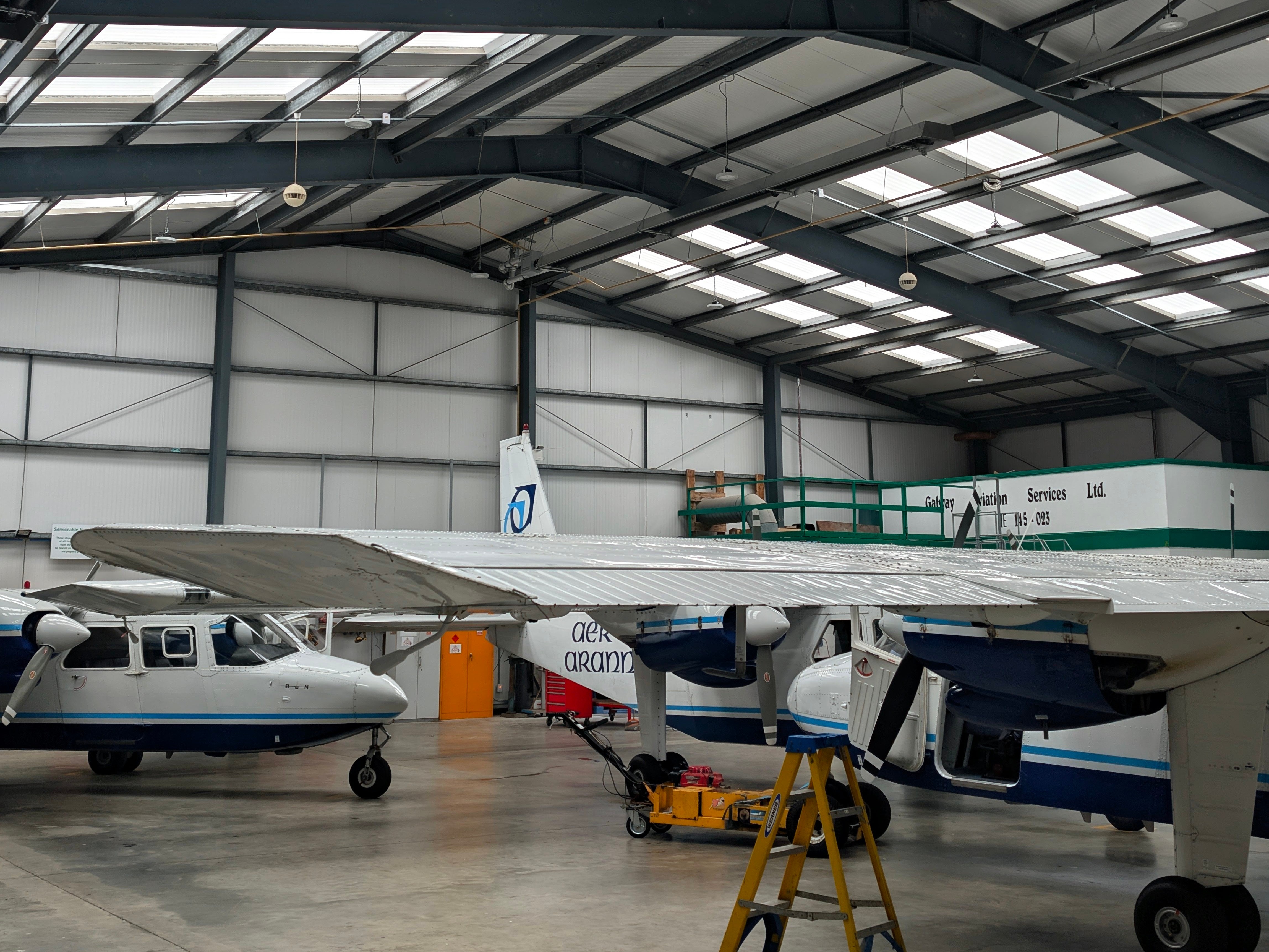
Aer Arann Islands has connected Connemara Airport in County Galway to the three Aran Islands, Inis Mór, Inis Meáin, and Inis Oírr, since 1970. Flights take under ten minutes gate to gate, which makes them some of the shortest scheduled routes anywhere. The service runs under a Public Service Obligation contract with the Irish government. For islanders this is not a scenic hop, it is the connection to the mainland. In 56 years of safe operation, the airline had never had a reservation system.
- Founded
- 1970
- Type
- PSO regional carrier
- Fleet
- Three Britten-Norman Islanders (9 seats)
- Routes
- Connemara (NNR) to the three Aran Islands
- Passengers
- 45,000+ a year
- Flight time
- Under 10 minutes gate to gate
- Live on Farel
- July 13, 2026
- Website
- aerarannislands.ie
- Launch story
- Read on our blog



Running an airline on one paper book
Every booking, change, refund, manifest, and load sheet was done by hand.
All availability in one book
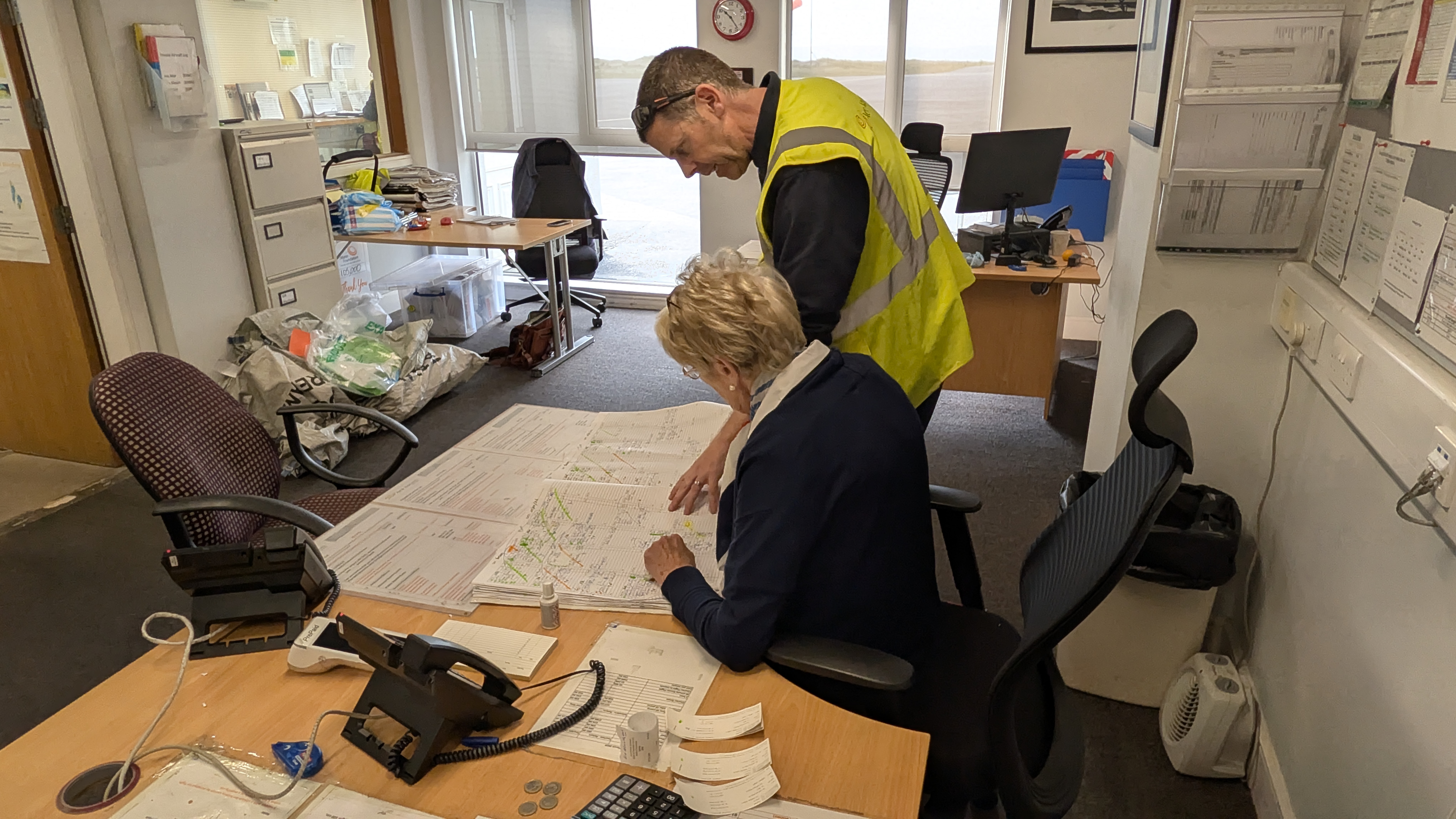
Seat availability lived on paper at a desk in Connemara. Three agents taking three calls queued for it, one at a time.
Island stations worked from stale paper
Remote stations had no copy. Handwritten tickets flew out with the passengers and the paper came back on the return flight.
Weight and balance by grease pencil
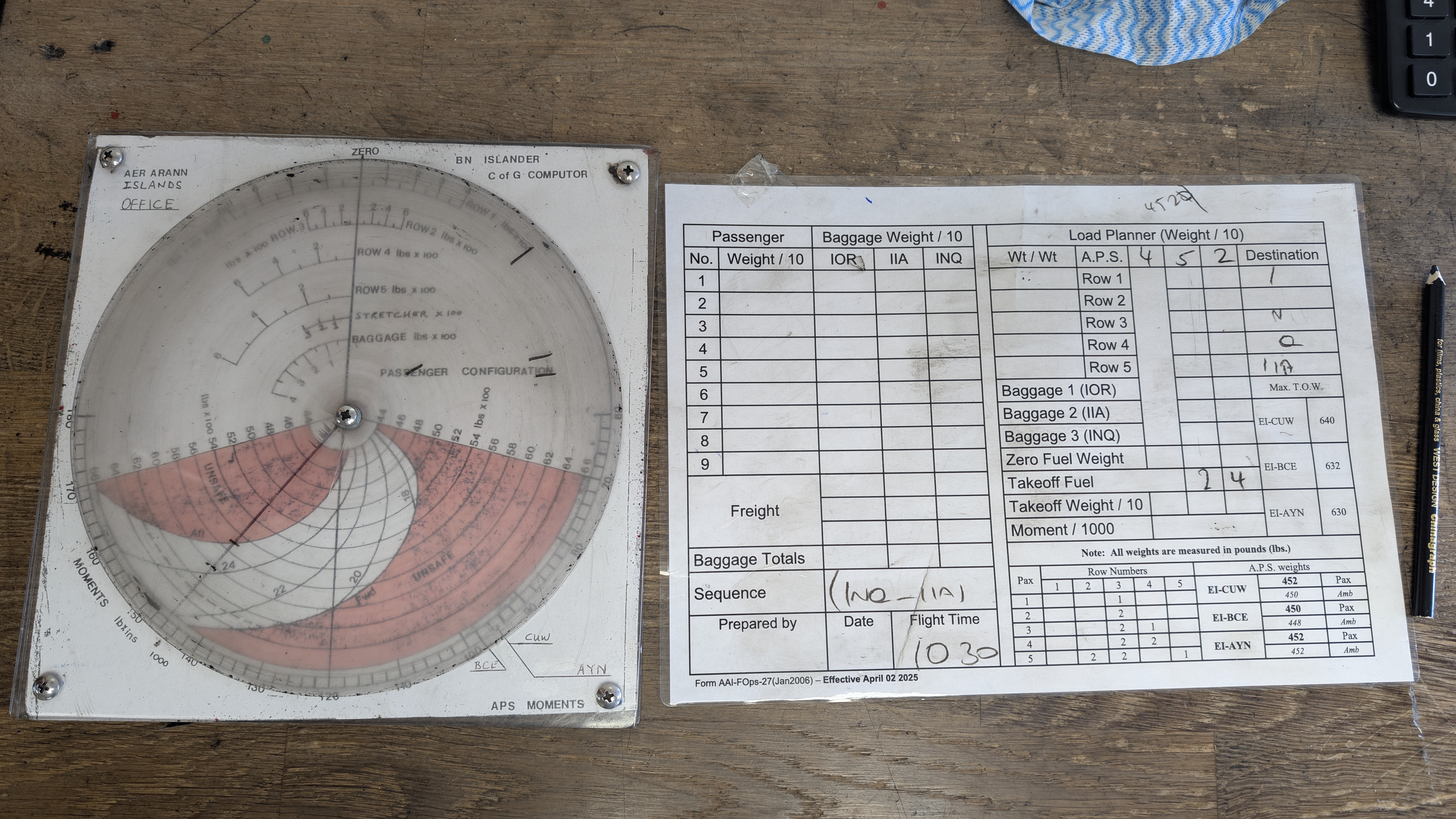
A rotating cardboard centre-of-gravity disc and a laminated load sheet, wiped clean after every flight. Seats were assigned at the aircraft steps by eye, by weight.
No online sales, no demand signal
Passengers phoned to ask whether seats existed. When a flight was full, that demand left no trace.
How Farel answered, point by point
A full airline system in weeks, without a multi-year IT project.
A full airline system, not a booking form
Everything that went live on July 13, including platform features we built for this operation that did not exist in Farel before.
Website with integrated IBE
Real-time availability and online payment. Passengers stopped calling to ask whether seats existed.
Native iOS and Android apps
Published under the airline's own brand, live the same week as the booking engine.
Reservations and inventory
Schedules, availability, changes, and refunds in one record, shared by every station.
Departure control and electronic manifests
Check-in, boarding, and manifests generated from live booking data, with per-passenger weights.
Payments and passenger messaging
Card payments through the airline's acquirer, plus email and SMS on a registered Irish sender ID.
Actual passenger weight at check-in
Agents record each passenger's real weight during check-in and it flows into the electronic manifest. On a nine-seat Islander, that number is not a formality.
PSO passenger categories
Elderly island residents receive a set number of free government-funded tickets each year, then move to a resident discount. Students have their own fares. Residents and tourists are separate categories. Farel manages eligibility, free-ticket counters, and discounts natively.
"Notify me" on sold-out flights
When a flight has no seats left, passengers register interest instead of leaving. The commercial team sees pent-up demand by date and segment, with contacts to reach out to, and can add a rotation when the numbers justify it.
The first month on Farel
Measurable change across calls, data, and revenue, with more metrics to follow as the data lands.
First month on Farel. Better than expected, and it eliminated the frantic activity in the Ops office.
Bookings, waitlists, check-in status, and paid extras, up from one book at one desk.
Bags and the Connemara to Galway bus sold at booking, with a live pickup list for the drivers.
Today is a great day for us. I can't stop looking at the dashboard. From nothing to this feels so good.
Could this work for your airline?
Farel fits carriers that need to replace manual operations end to end, without an in-house tech team.
Runs on paper or spreadsheets
Bookings, manifests, and load sheets still done by hand.
Operates small aircraft where every passenger counts
Load control that depends on actual weights, not averages.
Serves PSO or subsidised routes
Entitlements, resident fares, and free-ticket counters that standard PSS platforms don't model.
Needs online sales and a mobile app
Direct channel live in weeks, under the airline's own brand.
Works across multiple stations
Remote bases that need the same live data as the main office.
Ready to see it run on your routes?
Aer Arann Islands runs on Farel. See the same platform on your network in a 30-minute session.